
My Oulu: From industrial heritage to a laboratory of the future – Aalto Silo draws attention across the EU
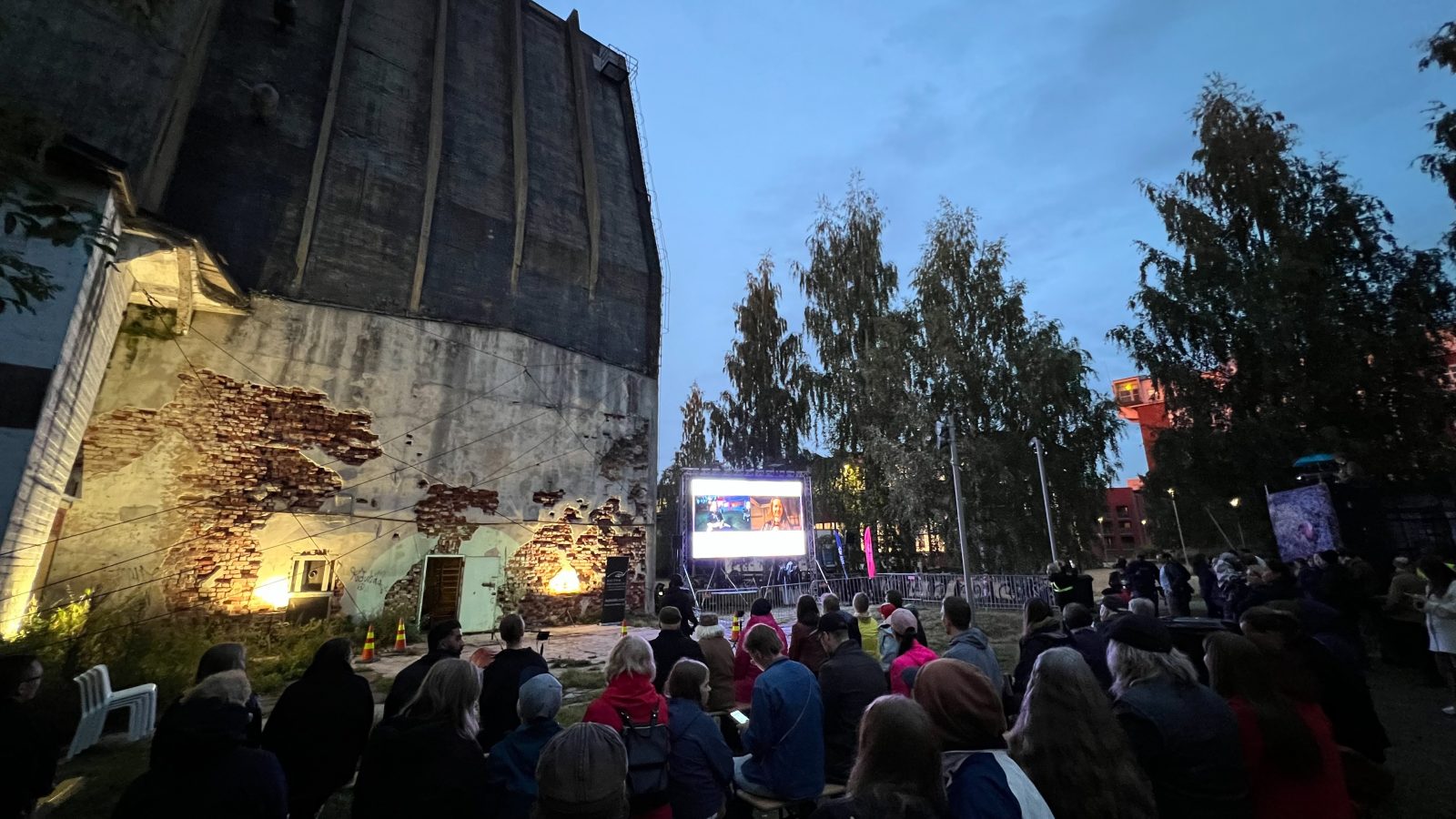
Aalto Silo in Meri-Toppila is being developed through international collaboration into a multifunctional venue for cultural events, performances, and exhibitions. The photo shows the audience at the Aalto Silo Festival in September 2024. Photo: Pasi Rytinki
Jaa sosiaalisessa mediassa:


The winners of the European Union Prize for Contemporary Architecture – the Mies van der Rohe Awards – were announced in April at Aalto Silo in Oulu. The new life of the building designed by Aino and Alvar Aalto demonstrates what cultural climate change means for the city: international visibility, networks, and new visions for the future.
In mid-April, the eyes of Europe’s architectural circles turned north as the winners of the EUmies Awards were announced at Aalto Silo in the Meri-Toppila district of Oulu.
Fundació Mies van der Rohe and the European Commission established one of the world’s most prestigious contemporary architecture prizes in 1988. Throughout its history, the award ceremony has always been held in Barcelona. This year, however, a different decision was made: the event was moved to Oulu, Finland and to Aalto Silo, designed by Aino and Alvar Aalto in 1931.
For Aalto Silo to reach such an international spotlight required a genuine cultural climate change, not least among Oulu’s own officials, decision-makers, and residents. As recently as 2009, local residents voted Aalto Silo the ugliest building in the city.
”Only in recent years have we in Oulu truly understood the global significance of Alvar Aalto’s work. International tourists and delegations visiting Aalto Silo every day have helped us realize this. We did not always recognize the treasure standing before us”, admitted Mayor Ari Alatossava in his opening speech at the award ceremony.
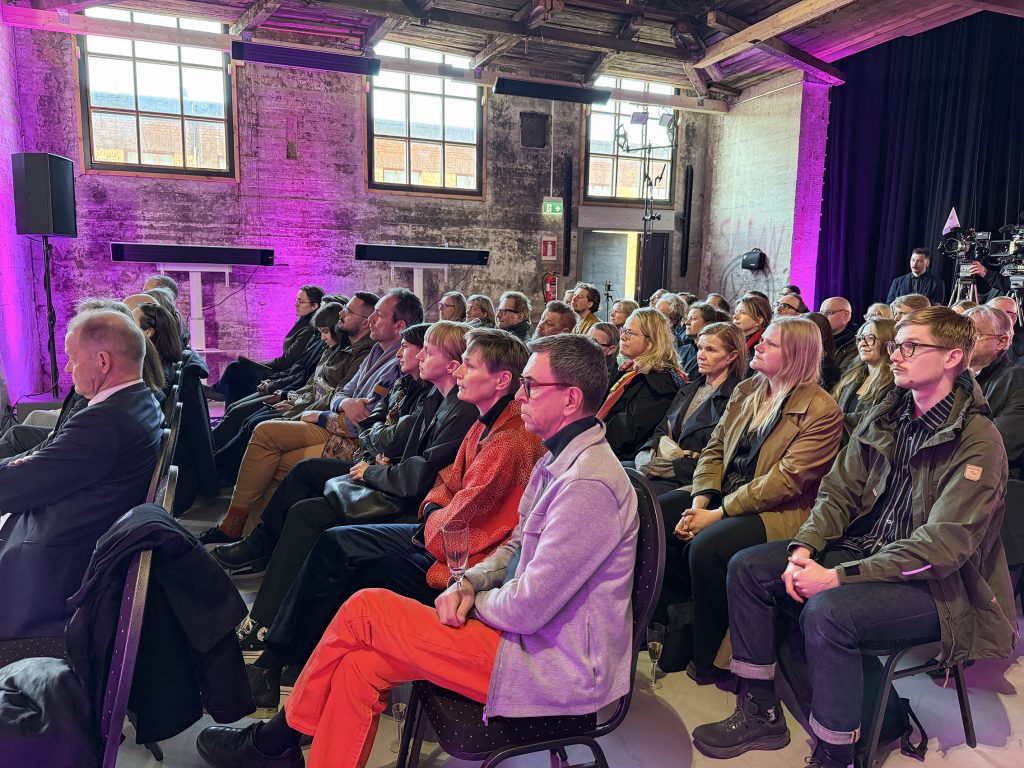
The announcement event for the Mies van der Rohe Awards attracted a large audience of architecture and design professionals both on-site and online. Photo: Anne Laurila
Now that awareness has grown, Aalto’s industrial heritage is bringing Oulu more than temporary attention. Finland has reached the finals of the Mies van der Rohe Awards twice before: with the Helsinki University Main Library Kaisa House in 2013 and the Amos Rex art museum in 2019. Architectural circles have begun to speculate whether Aalto Silo could eventually bring this prestigious award to Finland — and to Oulu.
A more visible Aalto city
The network of Alvar Aalto cities includes 20 Finnish cities as well as Aalborg and Wolfsburg. Oulu has been part of the network since 2018 and serves as its chair this year. The tenth Aalto Week will be held in Oulu during the last week of August.
”Alvar Aalto’s designs located in Oulu are still relatively unknown, but they complete the picture of Aalto’s career development, especially as a designer of industrial sites across different decades”, says Pia Krogius, city planning architect for the City of Oulu.
”The Toppila factory complex, which includes Aalto Silo, was Alvar Aalto’s first industrial commission, but it is not the only work he designed in our city. Aalto won the 1943 design competition for the façade and environmental planning of the Merikoski power plant. He also created the master plan for Koskikeskus, which later guided the implementation of bridge traffic systems, the Toivoniemi tower blocks, waterfront green areas, and reflecting pools with fountains. Commissioned by Typpi Ltd, he also designed the red-brick industrial community in Laanila”, Krogius continues.
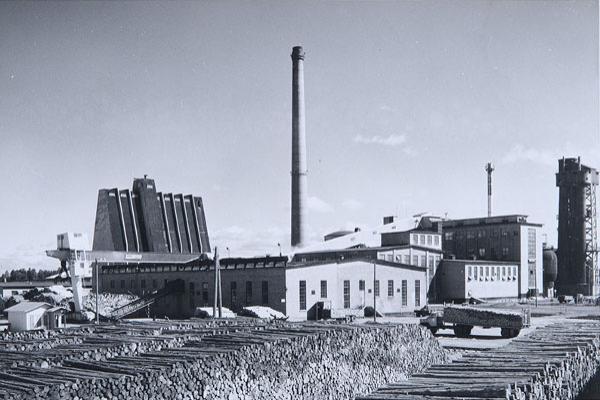
The Toppila sulfite pulp mill designed by Alvar Aalto photographed in 1963. In the foreground is the pulpwood storage area; on the left, a terminal crane, and next to it the mill itself and the power plant. The silo can be seen in the background on the left. Photo: Teollisuusvalokuvaamo Mannelin / Finna
The Oulu sites are part of the Alvar Aalto Route – 20th Century Architecture and Design cultural route, which was accepted into the Council of Europe’s Cultural Routes programme in 2021 as Finland’s first such route. The route includes more than 60 Aalto architecture sites in 27 cities across five countries. The goal is to achieve even stronger international visibility for Finland’s Aalto destinations.
”The Aalto Works series, consisting of thirteen sites designed by the Aaltos in Finland, is currently nominated for the Unesco World Heritage. Oulu itself is not part of the Aalto Works sites, but if World Heritage status is granted, our local sites in Oulu will also become even more attractive”, Krogius notes.
A decision is expected this summer, and a positive outcome would bring a special celebratory atmosphere to Aalto Week.
Making Aalto’s handprints visible
The theme of Aalto Week, held in Oulu from August 21–30, is Handprints. The theme refers to how architecture and construction leave marks on the environment — impacts that will be examined from many perspectives during the week.
”We are planning Aalto Week together with Factum Foundation and Aaltosiilo ry. EUmies Awards director Ivan Blasi and Jutta Kastner from the European Commission’s Creative Europe programme have promised to return to Oulu for Aalto Week”, Krogius says.
The week aims to highlight Aalto’s designs located in Oulu in a variety of ways.
”In fact, Oulu has Alvar Aalto’s actual handprints. As an honoured guest invited to the celebrations, Aalto pressed his hands into concrete during the 10th anniversary celebration of the Oulu Architecture Guild in 1969”, Krogius reveals.
Building collaboration
In February, Mayor Ari Alatossava and Adam Lowe, CEO of Factum Foundation, signed a memorandum of understanding committing the parties to advancing cultural climate change and strengthening Oulu’s reputation as an Alvar Aalto city.
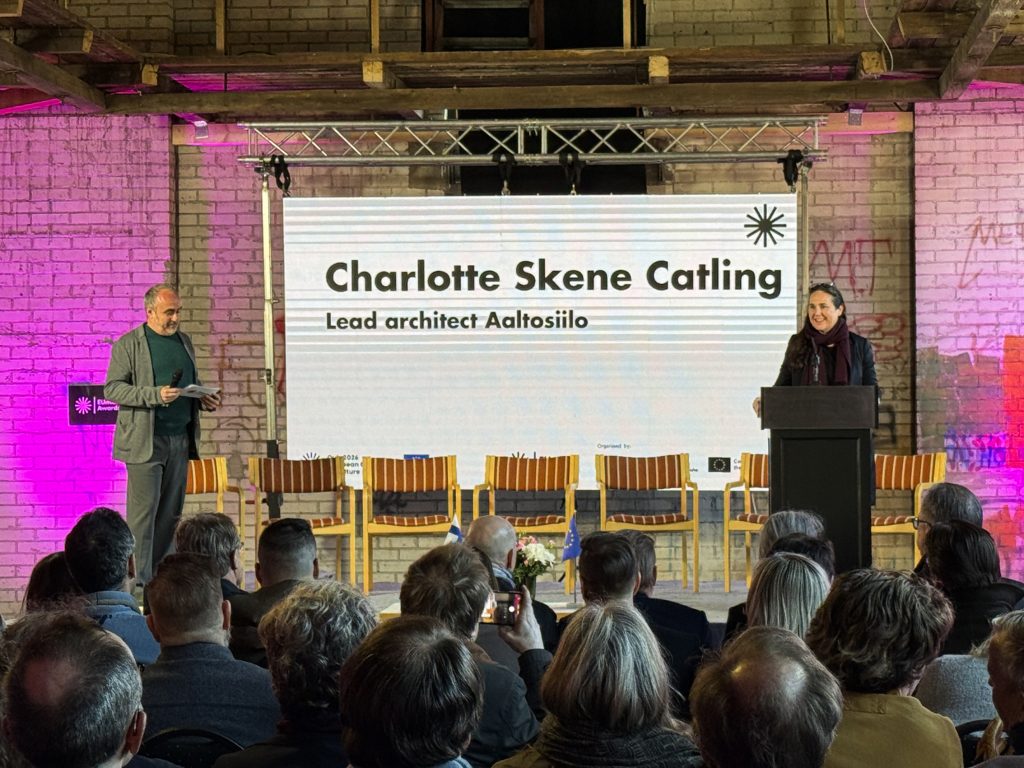
According to Aalto Silo’s lead architect Charlotte Skene Catling, Oulu is exactly the right-sized city to carry out an ambitious project like Aalto Silo. Photo: Anne Laurila
Factum Foundation purchased Aalto Silo from the City of Oulu at auction in 2020. Before that, the building had stood empty and severely deteriorated for three decades. Now, a cultural center unlike anything else in Finland — perhaps even in Europe — is emerging in the heart of Meri-Toppila.
”Aalto Silo is intended to demonstrate that even impossible problems can be solved. If we can make this building work for people, we can do the same for any building”, Charlotte Skene Catling stated during the Mies van der Rohe Awards ceremony.
When the sulphite mill ceased operations in 1985, the city recognized the value of the area’s industrial heritage and the buildings designed by Alvar Aalto’s office.
All factory buildings that could be adapted for new use were protected in the city plan and assigned new purposes. The digester building became an apartment building, the drying facility was converted into commercial space, and the power station became a climbing center. Aalto Silo’s new life truly began only when Factum Foundation took charge of its development.
Now, something potentially unique is emerging in Meri-Toppila — something that may help define the future of construction and demolition alike, with Aalto Silo serving as a perfectly sized research laboratory in the eyes of the EU as well.